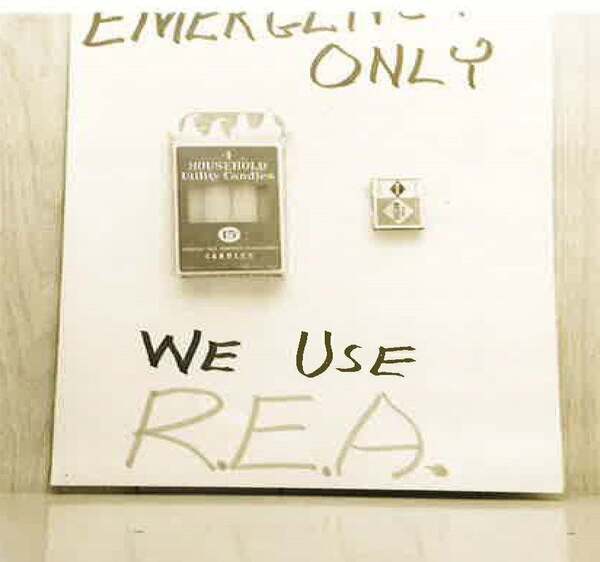
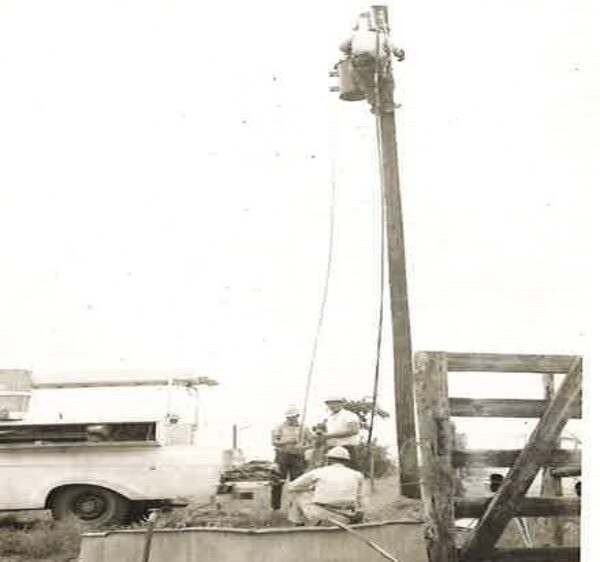
Electric cooperatives are a product of Franklin D. Roosevelt's New Deal. In the early 1900's, the utility companies that provided the cities with energy believed building power lines into the rural areas of America would not be profitable. Therefore, most of America was dark and not given the opportunity to utilize a commodity most citizens could not function without today. The Rural Electrification Act of 1935 brought the Rural Electrification Administration, also known as the REA, to life. Farmers and ranchers could group together and borrow federal money to establish an electric cooperative owned by the members.
America would soon be impacted in a way no one predicted. Before the establishment of the REA, an aerial night view of Texas would show clusters of light representing large cities like Dallas, Austin and El Paso, and even smaller clusters scattered throughout the state. This all changed by 1940. Nationall 567 co-ops were established in 46 states and served 1.5 million members.
Today, over 960 electric cooperatives serve 42 million members in 47 states. Texas alone has 64 distribution co-ops and 11 generation and transmission co-ops. A whopping 320,000 miles of line meander throughout 241 of the 254 Texas counties and serve 2.1 million meters.
America was founded on the basis of a capitalist system of free enterprise. Cooperatives have helped fuel the success of our nation by providing both a market for producers and a source for consumers. While many people believe a company should provide the highest economic return possible for investors, co-ops think differently, because service is equally important. The Cooperative Difference goes back to exceptional member service, and encouraging member participation through capital credits and participation in the democratic control.